

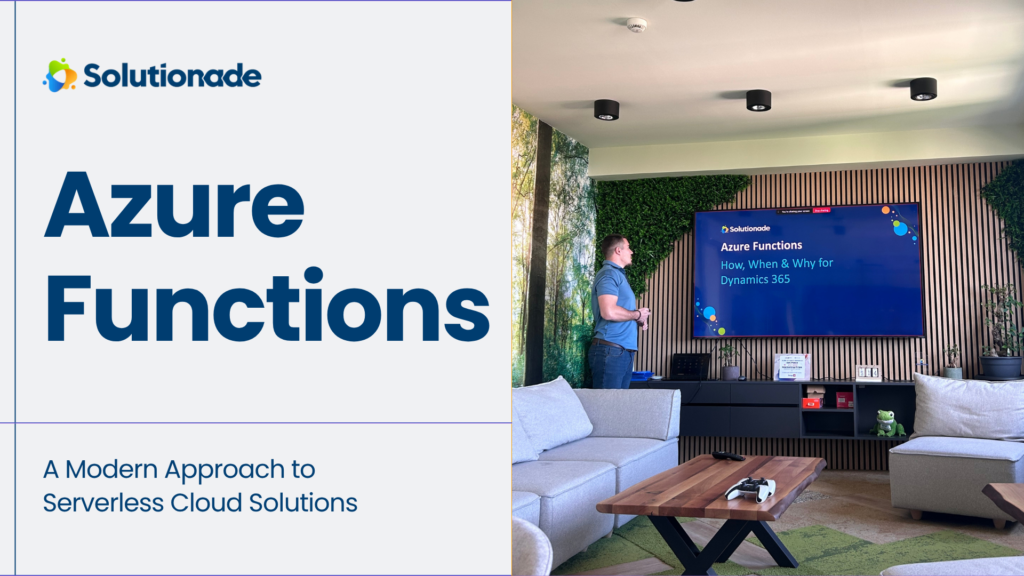
In today’s enterprise landscape, applications are expected to scale effortlessly, integrate seamlessly, and evolve quickly without increasing operational overhead. Organizations are increasingly adopting cloud-native architectures to meet these expectations while maintaining security and reliability. Azure Functions plays a central role in this shift by enabling serverless, event-driven solutions that reduce complexity and accelerate delivery.
Azure Functions allows organizations to focus on business logic rather than infrastructure. By removing the need to manage servers, it empowers teams to build scalable solutions that respond dynamically to real-world events.
What Are Azure Functions?
Azure Functions is a serverless compute service that executes code in response to predefined triggers. These triggers can include HTTP requests, messages from Azure Service Bus, scheduled timers, Event Grid notifications, or events originating from systems such as Dataverse or Dynamics 365.
Because Azure manages the underlying infrastructure, developers no longer need to worry about server provisioning, operating system maintenance, patching, or capacity planning. Each function runs only when triggered and stops as soon as execution is complete, making solutions lightweight and efficient.
Event-Driven Architecture as a Foundation
One of the key strengths of Azure Functions is its event-driven execution model. Instead of building monolithic applications that continuously run, organizations can design systems where individual components react to specific events.
This approach aligns well with modern architectural principles such as microservices and loose coupling. Each function has a single responsibility, making solutions easier to develop, test, maintain, and evolve over time. Event-driven design also improves resilience, as failures in one component are less likely to cascade across the entire system.
Cost Efficiency and Automatic Scaling
Azure Functions offers a highly cost-effective pricing model, particularly for workloads with unpredictable or variable demand. Billing is based on execution count and duration, meaning organizations pay only when code runs.
This makes Azure Functions ideal for integrations, background processing, data synchronization, scheduled jobs, and webhook handlers. During traffic spikes, the platform automatically scales out to meet demand. When activity drops, it scales back down, sometimes to zero, ensuring resources are never wasted.
Using Azure Functions for Enterprise Integration
In many enterprise environments, systems rarely operate in isolation. CRM platforms, ERP systems, third-party APIs, and legacy applications must exchange data reliably and securely. Azure Functions excels as an integration and extension layer in these scenarios.
By moving complex business logic, transformations, and external calls into Azure Functions, core platforms such as Dynamics 365 remain cleaner and easier to maintain. This approach reduces plugin complexity, simplifies upgrades, and improves overall system stability while enabling advanced integration scenarios.
Reliability, Observability, and Resilience
Reliability is a critical requirement for enterprise workloads. Azure Functions supports several patterns that help teams build resilient solutions, including retry policies, dead-letter queues, and Durable Functions for long-running or stateful processes.
Designing functions to be idempotent ensures that retries occur safely without creating duplicate or inconsistent data. Application Insights provides built-in observability, offering detailed telemetry, logs, performance metrics, and alerts. This visibility enables teams to troubleshoot issues quickly and maintain high service quality.
Security and Governance Considerations
Security is a first-class concern when working with cloud-native solutions. Azure Functions integrates seamlessly with managed identities, allowing secure access to Azure resources without storing credentials in code or configuration files.
Secrets can be stored securely in Azure Key Vault, and access can be governed through Azure Active Directory and role-based access control. These patterns help organizations meet security, compliance, and auditing requirements while reducing operational risk.
Choosing the Right Hosting Model
Azure Functions offers multiple hosting plans to support different performance and connectivity needs. The Consumption plan is well suited for lightweight, cost-sensitive workloads, while the Premium plan provides pre-warmed instances, predictable performance, and virtual network integration. This flexibility allows solutions to start small and scale as requirements evolve without major architectural changes.
How Solutionade Can Help
Azure Functions provides a powerful foundation, but designing and implementing reliable, enterprise-ready solutions requires experience and architectural insight. Solutionade can help organizations plan, build, and optimize Azure Functions-based solutions, particularly in complex enterprise and Dynamics 365 environments. By combining deep platform expertise with proven integration patterns, Solutionade helps teams deliver secure, scalable, and maintainable cloud solutions that align with real business needs.
Frequently Asked Questions